Workshop Systems
Laser Ventilation for Home Workshops: What a Safer Setup Requires
Ventilation is an engineering and workspace question, not a smell test. Plan the entire emissions path around the machine, material, enclosure, ducting, filters, room, and local constraints.
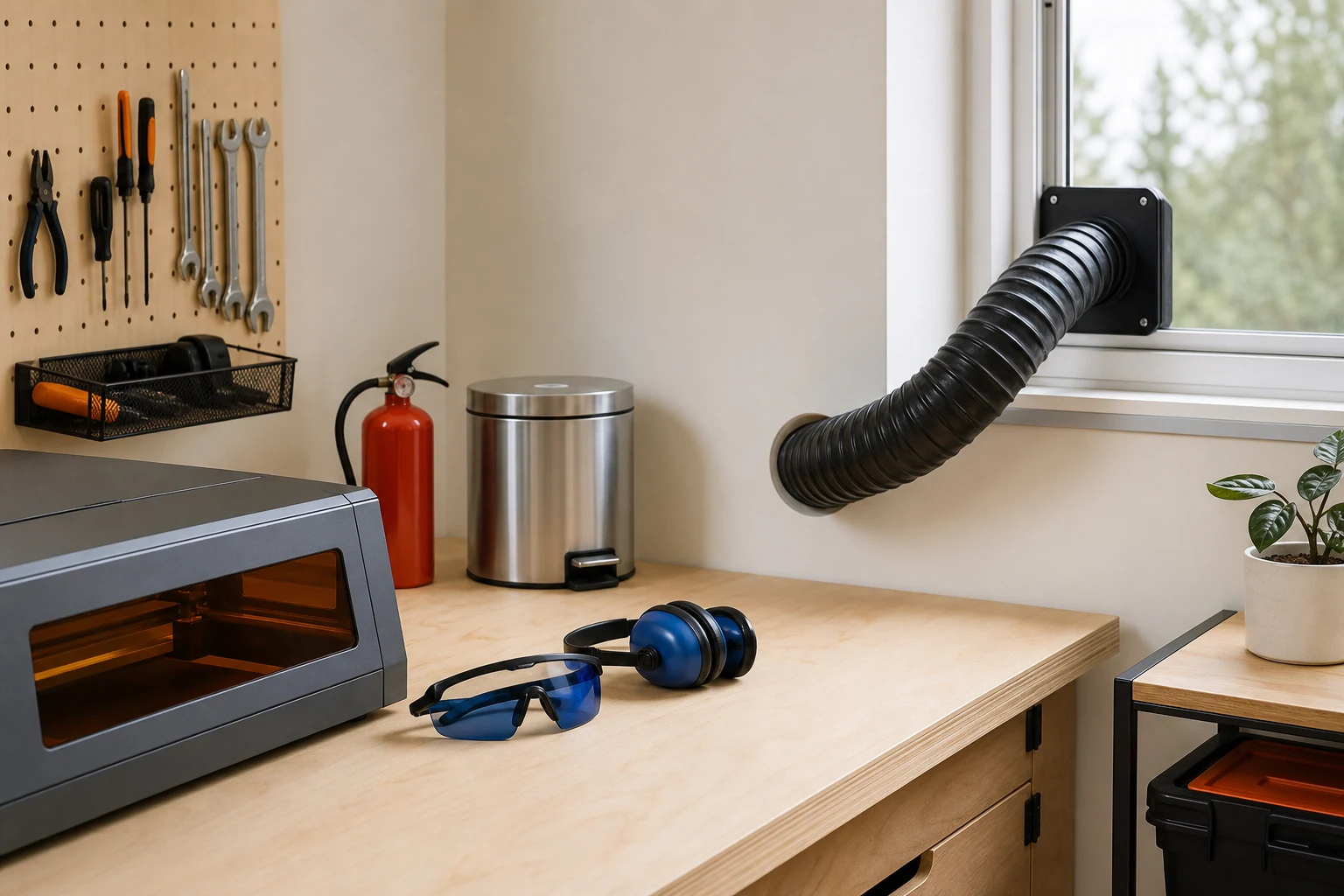
A Fan in the Room Is Not a Ventilation Plan
Confirm the machine requirements, local rules, exact material, and complete exhaust or specified filtration path before operating.
Why “It Does Not Smell Bad” Is Not Enough
Odor, visible smoke, or one consumer sensor cannot prove that all emissions are controlled. Performance changes with duct length, bends, leaks, filter loading, and enclosure design.
Four Separate Controls
Source Capture
Contain emissions near the work area before they disperse into the room.
Outdoor Exhaust
Move captured air outside when the system and local requirements allow it.
Specified Filtration
Use a manufacturer-appropriate system with known media, limits, monitoring, and maintenance.
General Room Ventilation
Helpful context, but not a substitute for source control.
Plan the Actual Path
Long duct runs, sharp bends, loose connections, residue buildup, and discharge locations near windows or air intakes can undermine a setup. Apartments, shared spaces, HOA rules, rental agreements, and local building rules may limit what is practical.
When Not to Operate
- No viable, machine-appropriate emissions-control route exists.
- The material or coating is not identified.
- Smoke escapes the enclosure or a specified filter is saturated or unknown.
- The space cannot support safe supervision or conflicts with local requirements.
Why There Is No Universal Airflow Number
The appropriate system depends on the machine, enclosure, material, ducting, pressure losses, filter media, and use case. A single number without those conditions creates false confidence.
Source Framework
Make a better first decision
Start with the work you want to make—not a product list.
Use our safety-first framework to match materials, workspace, ventilation, software, and total setup cost.
Choose Your First Laser