Safety Guide
Desktop Laser Safety Basics: A Practical Setup Checklist
A desktop laser is not ready because it fits on a bench. Build the material, emissions, fire, optical, electrical, and supervision controls before the first job.
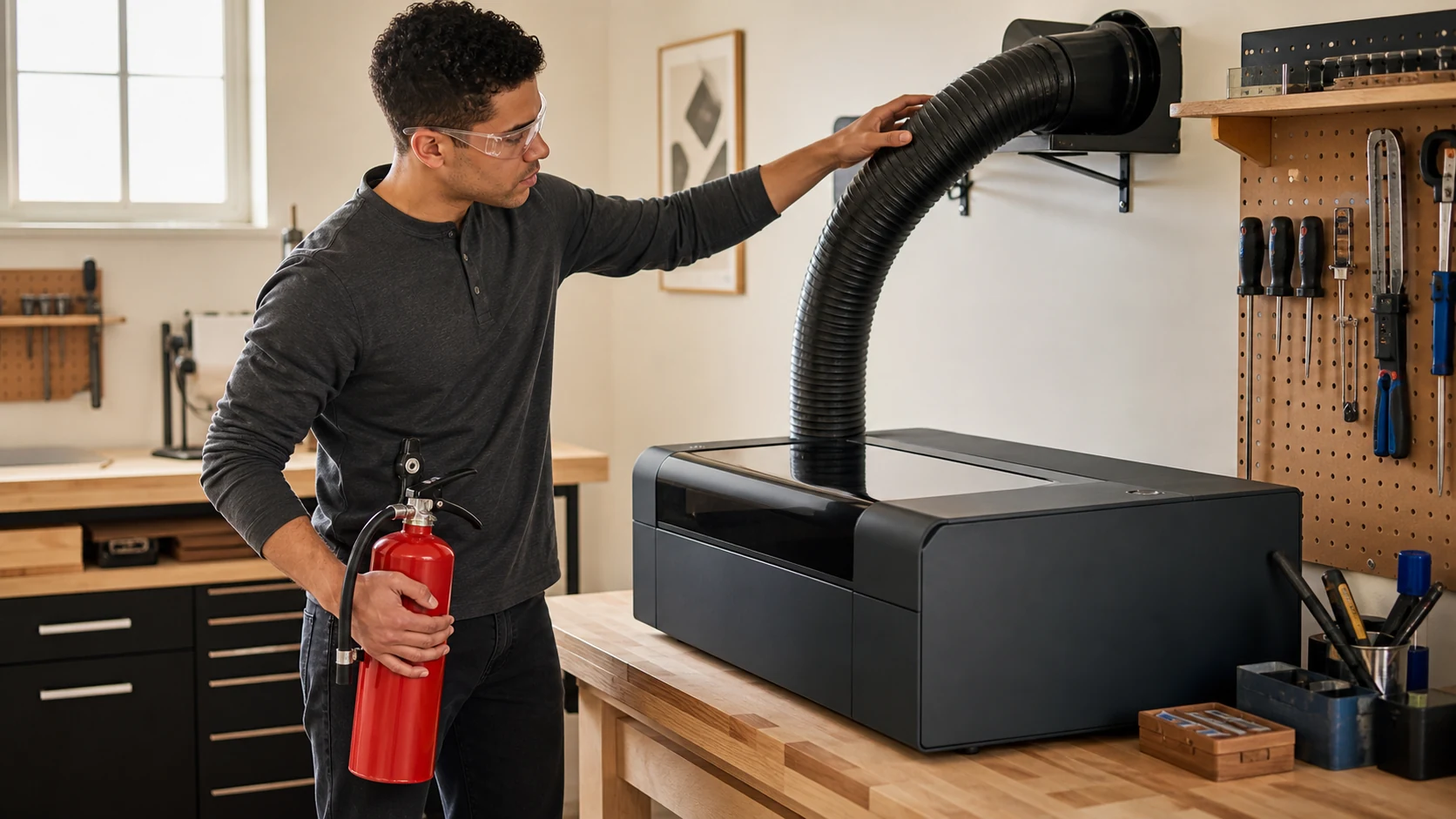
Safety Note
Follow the exact machine manual, supplier documentation, and local requirements. Never operate a laser unattended or process unidentified material.
Before You Start
- Identify the exact material and relevant documentation.
- Confirm the enclosure, interlocks, ventilation, and workspace requirements.
- Prepare for fire and remain present for the entire job.
Start With the Manual, Not a Project File
Read the manufacturer’s instructions for the exact machine, enclosure, interlocks, electrical requirements, approved materials, and maintenance schedule. A generic setting or accessory recommendation cannot replace those limits.
The Five Hazards to Plan For
Verify Materials Before Settings
Do not laser PVC, vinyl, halogenated materials, or anything with an unknown composition. Labels such as “acrylic,” “leather,” or “plywood” do not establish the adhesive, coating, pigment, or additive.
Use the material verification guide →
Ventilation Is a Safety System
Not smelling smoke is not evidence that emissions are controlled. Plan enclosure, source capture, ducting or filtration, and the constraints of the specific space before operating.
Plan ventilation for your workshop →
Pre-Flight Checklist
- Material, supplier, and relevant documentation are identified.
- The machine manual permits the material and task.
- Optics, focus, workholding, enclosure, and interlocks are checked.
- The specified emissions-control system is operating.
- The work area and escape path are clear; an appropriate response plan is accessible.
- An operator remains present for the entire job.
When Your Space Is Not Ready
Pause if you cannot identify the material, control emissions, supervise the job, or meet the machine’s installation requirements. That is a setup constraint—not a reason to disable an interlock, improvise a material, or accept risk.
Sources and Further Reading
OSHA laser hazards overview and FDA laser products and instruments.
Make a better first decision
Start with the work you want to make—not a product list.
Use our safety-first framework to match materials, workspace, ventilation, software, and total setup cost.
Choose Your First Laser