Materials Guide
Laser-Safe Materials Guide: What You Can and Should Not Engrave
The useful question is not “what setting should I use?” It is whether the exact material is identified, documented, approved, and appropriate for the machine and controls.
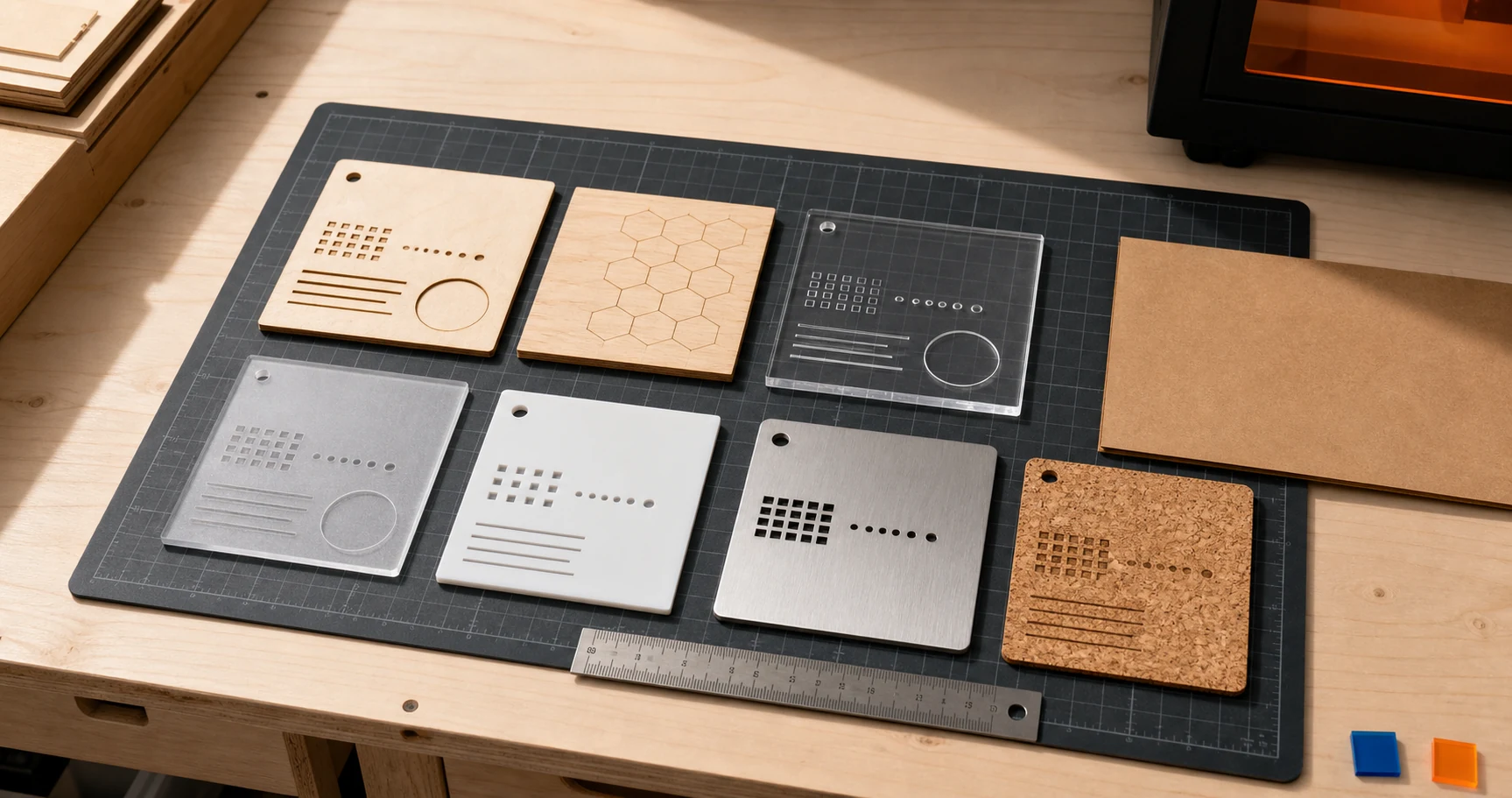
Treat Every New Material as Unverified
Confirm the sheet, blank, coating, adhesive, finish, supplier documentation, and machine approval before processing.
The Rule Before Every Material List
A trade label is not a safety clearance. “Plywood,” “leather,” “acrylic,” and “coated metal” may contain very different adhesives, pigments, fillers, coatings, or treatments. Document the supplier, product or lot, technical data sheet or SDS when available, and the date you verified it.
Use Three Practical States
| State | Meaning | Action |
|---|---|---|
| Commonly used when approved | Known composition and support in the machine documentation. | Follow the documented process and controls. |
| Verify before processing | Coated, adhesive-backed, composite, reclaimed, or missing clear composition data. | Obtain documentation before testing. |
| Do not laser | PVC, vinyl, halogenated materials, unidentified plastics, or manufacturer-prohibited material. | Do not process. |
Why Common Names Can Mislead
Plywood can vary in glue, voids, and finish. “Leather” may mean vegetable-tanned, chrome-tanned, synthetic, or an unknown composite. Acrylic labels do not reveal every additive or coating. A different lot can behave differently even when the product name looks familiar.
Do Not Build a Universal Settings Chart
Power and speed depend on the actual machine, wavelength, optics, focus, air assist, material lot, thickness, finish, enclosure, and ventilation. Keep a test log with those conditions instead of treating one result as universal.
A Lower-Risk Verification Workflow
Pair this process with Desktop Laser Safety Basics and Laser Ventilation for Home Workshops.
Make a better first decision
Start with the work you want to make—not a product list.
Use our safety-first framework to match materials, workspace, ventilation, software, and total setup cost.
Choose Your First Laser